
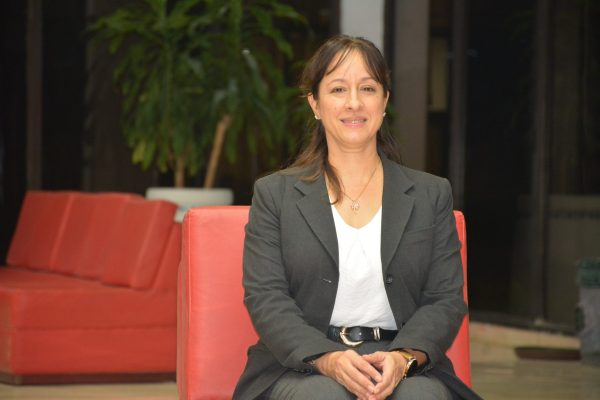
Interview with Gillian Martínez Donato, Development Manager for Jusvinza
Jusvinza has primarily been studied for the treatment of rheumatoid arthritis. We are currently developing a phase III clinical study. If the results are positive, as we expect—results that are already in the statistical analysis phase to prepare the final report—we will then present them to the Cuban regulatory authority: the Center for State Control of Medicines, Equipment and Medical Devices (CECMED). They will decide whether we can obtain a definitive sanitary registration for this indication, which is what will truly allow its use in the entire population suffering from rheumatoid arthritis. Following commercial registration, this will enable worldwide marketing.
To treat the symptoms of arthritis secondary to Chikungunya virus infection, we had to reposition the product for this indication, as we once did for COVID-19. Back then, the researchers working on the development of Jusvinza met and decided whether all the existing scientific-technical information supported its use for this new indication. We did this in response to the arrival of COVID-19, and it was very timely and truly very useful. It was demonstrated that administering Jusvinza reduced mortality in patients in intensive care. The Cuban regulatory authority granted Jusvinza a permit allowing its use in intensive care units.
Now, in response to Chikungunya virus infection, we also met to decide whether the drug’s rationale could be approved for use in residual arthritis. We then decided to conduct a phase II clinical study at two Cuban hospitals. We have now completed both clinical studies with very good results and the hypotheses were fulfilled. An improvement was observed in more than 70% of patients treated with Jusvinza compared to the control group treated with conventional therapy. Upon observing this benefit in treated patients, we decided to carry out a phase III clinical study with 300 patients suffering from arthritis secondary to Chikungunya virus infection. This study should allow us to register Jusvinza for treating patients who have suffered from the Chikungunya virus as well.
We truly have not stopped researching the rationale behind Jusvinza’s mechanisms of action. We are actively engaged in international scientific collaboration. These results have allowed us to publish in prestigious scientific journals, which has raised interest from various foreign companies in the drug. We are currently in negotiation processes with several companies interested in developing the product in various territories. Specifically in China, based on a licensing agreement, we are currently immersed in the development of a phase I clinical study that is going very well. The product’s safety has been demonstrated, and this will support its subsequent development; that is, moving forward to a phase II and eventually achieving sanitary registration in China for rheumatoid arthritis as well.