
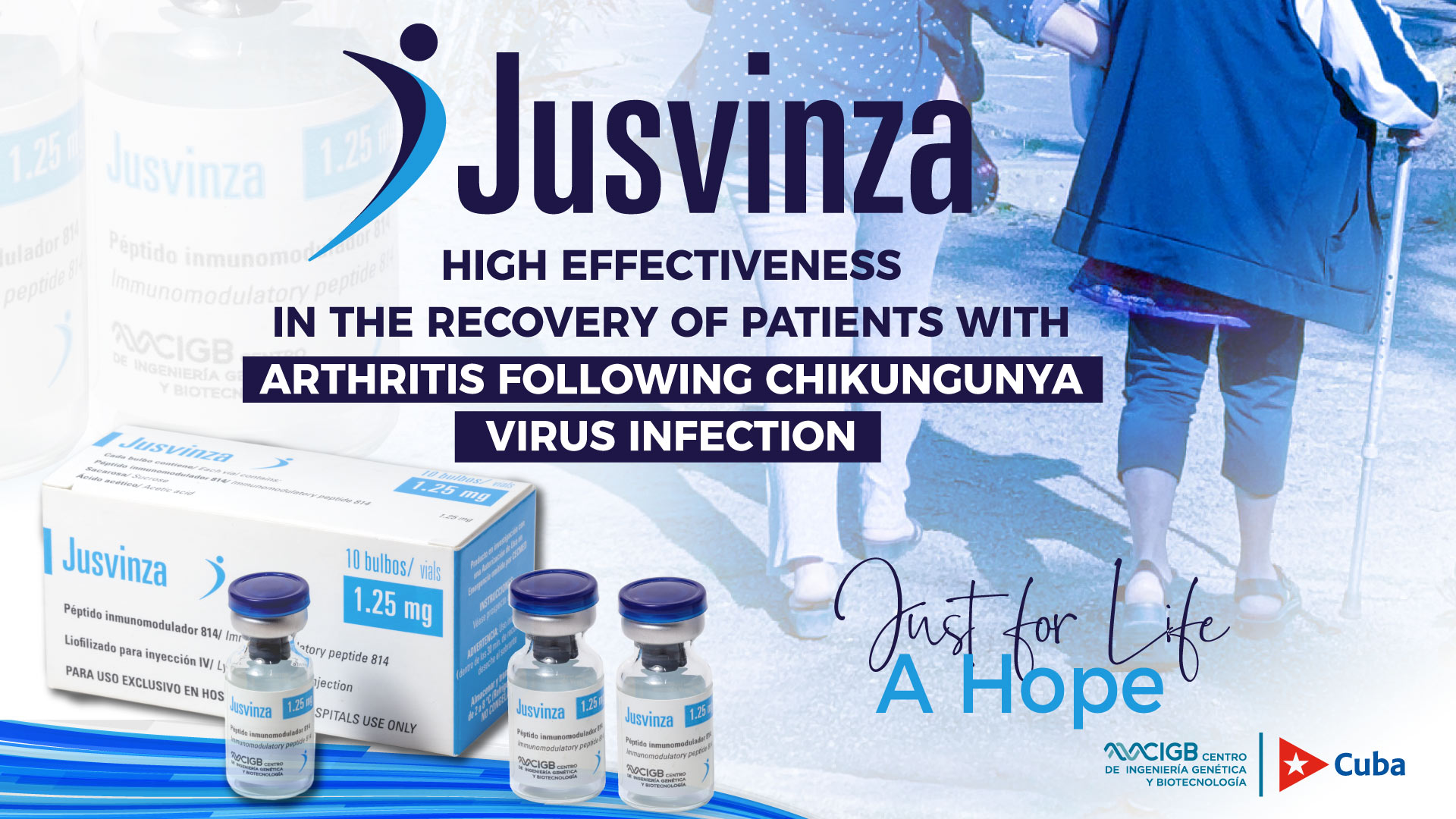
Specialists from the Center for Genetic Engineering and Biotechnology (CIGB) presented the results of a Phase 3 clinical trial on the use of Jusvinza in patients with arthritis following Chikungunya virus infection. These findings strengthen the profile of the Cuban drug—developed under the leadership of researcher Dr. María del Carmen Domínguez—which is already used in Cuba to treat conditions such as rheumatoid arthritis, Guillain-Barré syndrome, and COVID-19.
For this Phase 3 clinical trial involving the subcutaneous administration of Jusvinza to patients with Chikungunya-induced arthritis, 300 individuals were selected—90% of whom were in the chronic stage of the disease. Starting March 16, 2026, they received nine doses of the Cuban drug at a clinic in the La Lisa municipality and at the Diez de Octubre Clinical-Surgical Hospital.
We wanted to see if the results at week 12 remained consistent with previous studies; indeed, the therapeutic effect was validated as sustained. By week 12, among a total of 260 patients, an additional 16 had shown satisfactory progress, resulting in an 87% response rate. Furthermore, over 95% of patients achieved a reduction in disability—moving to a state of low disability or no disability—a figure that reached over 97% by week 12.
These Phase 3 trials on the use of Jusvinza—leveraging its anti-inflammatory properties in post-Chikungunya patients—were preceded by two earlier trials: one conducted in Matanzas and another in Havana. Both of those studies also yielded encouraging results.
Across all three trials, the initial hypothesis was conclusively confirmed. Jusvinza has been shown to elicit a favorable clinical response in patients, successfully reducing both painful and inflammatory joint symptoms; this enables patients to maintain their daily routines, return to work, and improve their quality of life. Crucially, throughout the drug’s clinical development for this indication, an appropriate safety profile was demonstrated, with no serious or moderate adverse events—only mild ones, most of which did not require conventional treatment to manage.
The report on the results of this Phase 3 clinical trial will soon be submitted to CECMED for evaluation, subsequent approval, and official inclusion in medical protocols for arthritis following Chikungunya virus infection.