
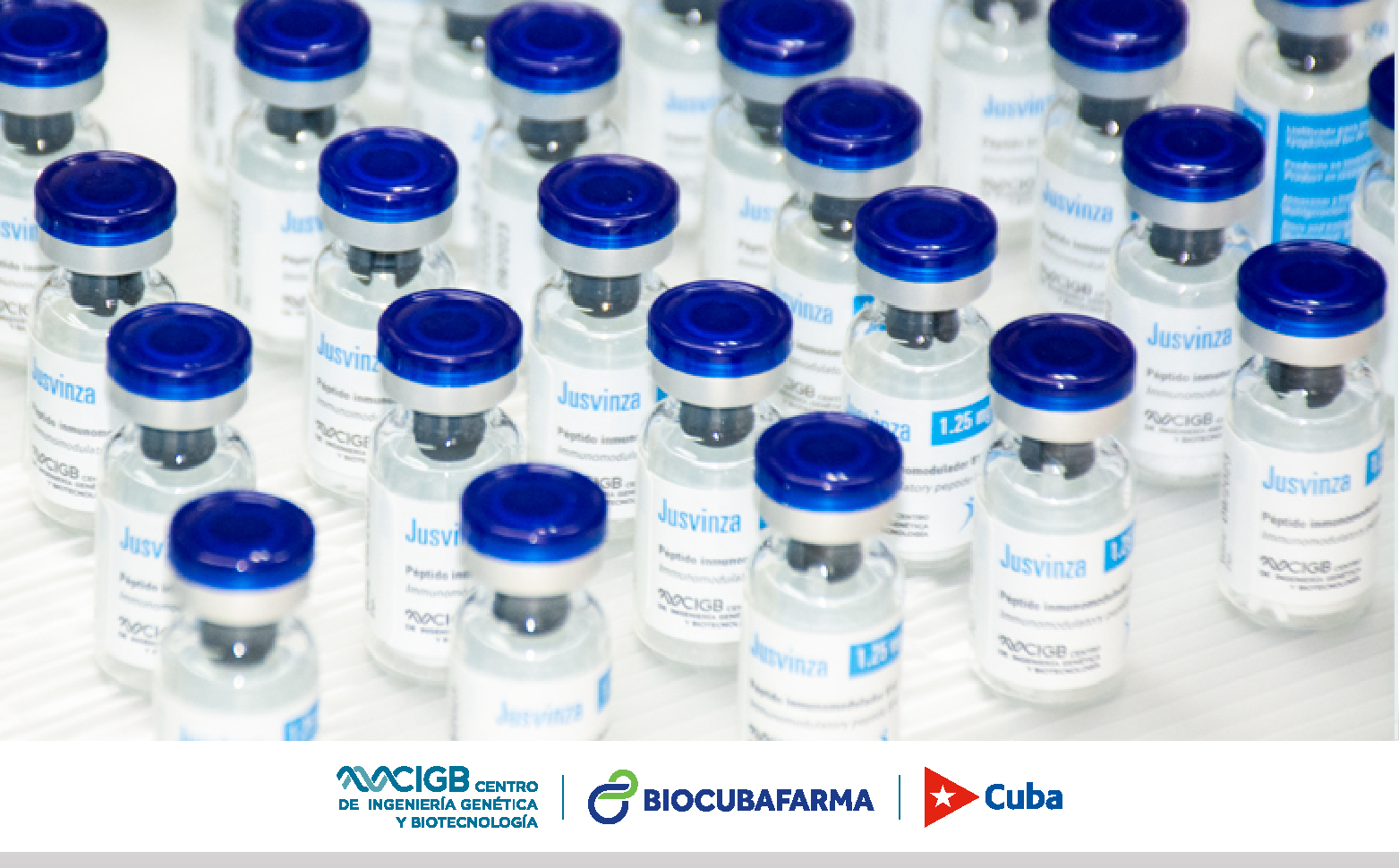
Jusvinza is an innovative immunomodulatory product. Its active ingredient is a modified peptide ligand, obtained through chemical synthesis. The amino acid chain of this peptide was designed using bioinformatics tools based on the 60 kDa human cell stress protein (heat shock protein 60, HSP60), which plays an important role in the pathogenesis of inflammatory diseases. This drug regulates the inflammatory immune response without inducing immunosuppression.
It is a lyophilized product that is dissolved in water for injection and can be administered subcutaneously or intravenously, depending on the therapeutic indication.
Due to its mechanism of action, Jusvinza can be used in the treatment of acute and chronic inflammatory diseases. Its use is protected by four patents covering the formulation and its use in a range of inflammatory diseases.
To date, Jusvinza has been evaluated for the indication of rheumatoid arthritis (RA), where its therapeutic effect and good safety profile have been demonstrated. In clinical studies assessing the application of Jusvinza, it has been shown that this drug reduces levels of proinflammatory cytokines and inflammation markers, which correlated with improved patient quality of life according to the American College of Rheumatology (ACR) criteria and the Disease Activity Score in 28 joints (DAS 28). Jusvinza has also been shown to increase the population of regulatory T cells capable of controlling the inflammatory response. These results led to the granting of a conditional Sanitary Registration for the use of Jusvinza in the treatment of RA, pending the completion of a phase III clinical trial, the results of which may offer the opportunity to obtain a definitive Sanitary Registration endorsing its use for this indication.
The positive results of Jusvinza in rheumatoid arthritis enabled its repurposing to modulate the cytokine disorder associated with SARS-CoV-2 infection. Evidence of increased survival in critically ill COVID-19 patients treated with Jusvinza led to the granting of an Emergency Use Authorization. Subsequently, its use was authorized in moderate, severe, and critical COVID-19 patients. During the pandemic, nearly 12,000 patients were treated with this product, which prevented progression to severe stages of the disease and contributed to reducing the mortality rate in the country’s intensive care units. During the most critical period of the pandemic (January–August 2021), the Cuban Ministry of Public Health reported that 76% of critical patients admitted to intensive care units had been treated with Jusvinza, with an 85% survival rate. Based on these results, we initiated a phase II clinical trial of Jusvinza for the treatment of severe community-acquired pneumonia, which is currently ongoing.
Due to the active outbreak of Chikungunya fever in Cuba, and because post-infection arthritis and RA share common immune mechanisms—including exacerbated production of proinflammatory cytokines, regulatory T cell (Treg) dysfunction, inflammatory cell infiltration into synovial tissue, and activation of proinflammatory signaling pathways—the study of Jusvinza for this disease was proposed. To this end, two randomized, controlled trials against conventional therapy were designed to evaluate the safety and therapeutic effect of Jusvinza in the post-acute stage following Chikungunya infection, which included 174 patients, along with a clinical trial in the chronic stage involving 120 patients.
The results of both studies were very positive: the product’s safety was demonstrated, and patients treated with Jusvinza, both in the post-acute and chronic stages, perceived significant clinical improvement of over 70% after the fourth or sixth dose of the product. These results surpass the estimated 55–60% improvement seen in the group treated with conventional therapy, thus fulfilling the hypothesis proposed in both studies. These findings led us to initiate a phase III clinical trial with 300 patients, which could allow the product to be registered for this disease after demonstrating safety and efficacy.
Significant efforts are currently being made to conduct clinical trials for other indications for which no effective treatments yet exist, such as systemic lupus erythematosus and ankylosing spondylitis, among others.
In response to the potential demand for this product, we have increased the capacity and standards of the production system; however, we must continue working in this direction as we demonstrate the product’s effectiveness based on its potential. Currently, the active ingredient is produced at CIGB Havana, and we have successfully established final product manufacturing at CIGB Mariel.
The broad mechanism of action of this drug and its potential justify its use in a wide range of acute and chronic inflammatory diseases. Furthermore, its immunomodulatory and anti-inflammatory action in maintaining immune system homeostasis, along with its effect on both the innate and adaptive immune systems without inducing immunosuppression, constitute important advantages that distinguish Jusvinza from all other drugs registered to date. These features make it a valuable tool for the Cuban healthcare system and grant it great potential for export.